

OCI Enterprise AI Private Endpoints for Imported Models: The Routing Architecture Change Every Multi-Cloud Operator Needs to Audit
OCI Enterprise AI now supports private endpoints for imported models and guardrail version pinning—two changes that directly reshape how engineering teams route across cloud AI providers in compliance-sensitive deployments.
Archive item produced with AI assistance from the cited source and published without individual review. Editor of record: Joe Werner.

Until now, teams using Oracle Cloud Infrastructure's Enterprise AI platform had a structural split: Oracle-managed models (Cohere, Llama-based) could be served through private endpoints, but imported third-party models—DeepSeek V4, GLM 5.2, Qwen3-Next, Kimi K2.7—still required a public internet path. That gap forced operators to either accept the public route or build custom VPN/PrivateLink workarounds for compliance-sensitive workloads.
OCI Enterprise AI has now closed that gap. Private endpoints for imported models are generally available, and guardrail version pinning has shipped alongside it. Both changes are live as of July 2026 and require a routing architecture review for any team using OCI as an AI inference backend.
What happened
Oracle shipped two infrastructure updates to OCI Enterprise AI in July 2026:
Private endpoints for imported models. Teams can now create private endpoints for any model imported via Model Import—covering DeepSeek V4 Flash and V4 Pro, GLM 5.2, Qwen3-Next-80B-A3B-Instruct, Kimi K2.7 Code, MiniMax M3, Mistral Medium 3.5, and others. Requests to these endpoints never leave the OCI VCN; traffic flows through a private network path without touching the public internet.
Guardrail version pinning. The ApplyGuardrails API now accepts a guardrailVersionConfig field. Teams can pin to a specific semantic version (e.g., 1.0.1) using ListGuardrailVersions to browse available options. Version 1.0.0 is the foundational release; 1.0.1 improves accuracy for content moderation (CM) and prompt injection (PI) detection. Omitting the version field continues to use the latest active default.
The July 2026 model import additions also added OpenAI Whisper Large V3 Turbo and Google MedGemma 27B Text IT, expanding the non-text inference surface that private endpoints now cover.
Why it matters for AI engineering teams
Private endpoints end the public-route compromise. Any team running OCI-imported models under data residency requirements, financial compliance mandates, or enterprise network policy has been operating in a gray zone. Routing AI inference traffic over the public internet—even with TLS—creates audit surface, complicates firewall policy, and fails many enterprise security reviews. Private endpoints remove that friction without requiring you to move off OCI or build a transit gateway workaround.
Guardrail version pinning is a production stability control. Before this change, an update to OCI's guardrail models could silently change the behavior of content moderation and PII detection in production. A guardrail that previously passed a class of inputs might begin blocking them after a background update—with no version-bump signal to your monitoring. Pinning gives operators the same stable-behavior guarantee that model version pinning already provides: you control when behavior changes.
The model catalog expansion changes the routing calculus. GLM 5.2 via OCI Model Import adds a long-context reasoning and coding option with 1M context on Oracle infrastructure. Qwen3-Next-80B-A3B-Instruct adds a sparsely-activated MoE model from the Qwen family. The combination of a broader import catalog plus private endpoint support makes OCI a more complete alternative routing destination for teams who already use OCI for other workloads or who need APAC/OCI region availability.
The router/operator angle
Multi-cloud routing now has a private-path tier on OCI. For operators managing routing across Azure AI Foundry, AWS Bedrock, Vertex AI, and OCI, the private endpoint update means OCI imported models can now sit in the same compliance tier as their cloud-managed counterparts. Your routing policy can now safely direct compliance-sensitive workloads (PII-containing prompts, financial documents, healthcare data) to OCI-imported models without carving out a network exception.
Guardrail version pinning fits directly into a gateway-layer stability policy. If your routing gateway applies OCI guardrails as a policy layer before forwarding to a model endpoint, version pinning lets you decouple your guardrail update cadence from OCI's release schedule. The recommended pattern:
- Lock to a pinned version in staging and production.
- Run
ListGuardrailVersionsin your CI pipeline to detect new versions. - Validate behavior in staging before promoting the version pin to production.
- Use deprecation/retirement timestamps from the API to plan mandatory upgrades.
What to check in your current OCI model routing setup:
- Are any imported model endpoints currently going over the public internet? If so, migrate to private endpoints for any workload under network security or compliance policy.
- Are you using the
ApplyGuardrailsAPI without a version pin? AddguardrailVersionConfigto lock behavior—especially if your team maintains SLOs on moderation accuracy. - Does your imported model set match the July 2026 catalog additions? The new Kimi K2.7 Code and Qwen3-Next options may shift your routing decision for long-context coding and reasoning tasks.
What TheRouter users should watch or try
If you're routing across multiple AI cloud providers, OCI's private endpoint support for imported models reduces the compliance friction of including OCI routes in your fallback pool. Teams evaluating whether to add OCI as a secondary or regional provider can now do so without the network architecture compromise that previously made compliance reviews difficult.
The guardrail version pinning pattern—separate governance lifecycle from model routing lifecycle—is a principle worth applying at your gateway layer regardless of cloud. Stable content policy behavior under independent update control is part of a mature multi-provider routing architecture.
Monitor OCI's ListGuardrailVersions output and Oracle's release notes at /docs/ for version lifecycle updates. Guardrail deprecation timelines are now surfaced in the API response, which makes automated governance pipeline integration straightforward.
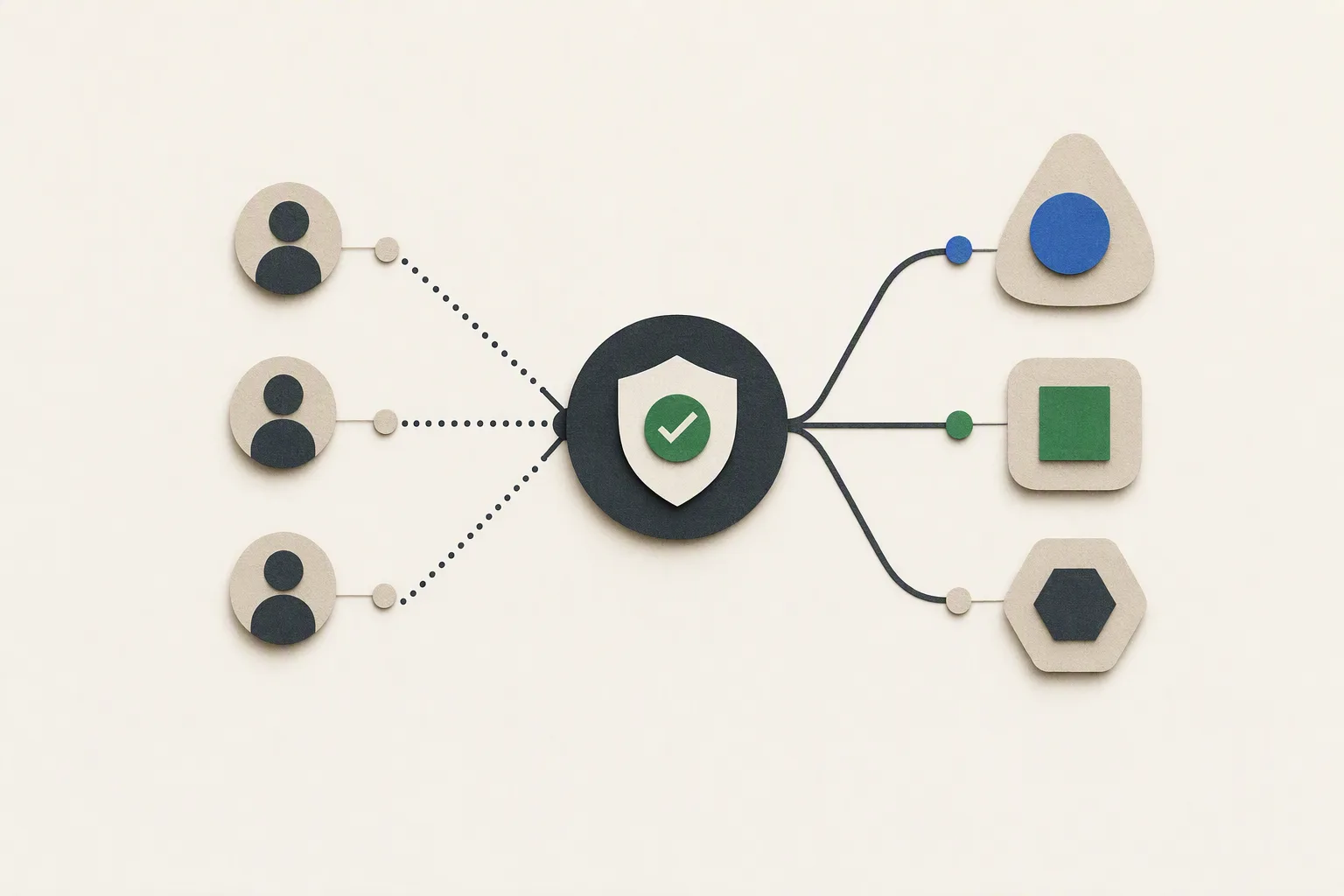
Claude Code 2.1.281: Bedrock Upstreams Get Cross-Account IAM and Guardrail Enforcement
2.1.281 adds assume_role and guardrail to Bedrock upstreams. assume_role swaps long-lived IAM credentials for per-developer STS tokens. guardrail applies a Bedrock guardrail to every request. Both shift the trust boundary in multi-account AWS deployments.

Claude Opus 5.5: Four Breaking API Changes and What They Mean for Your Routing Setup
Four breaking changes in Claude Opus 5.5: thinking can't be disabled, forced tool_choice returns 400, thinking blocks don't cross non-Fable/Mythos models, and computer_20251124 is gone. Each has a specific fix — three carry fallback routing implications the announcement skips.
Claude API: Compaction on Demand and the `auto` Permission Mode Change Your Agentic Loop Design
Two new Claude API betas: `compact-2026-09-04` moves summarization off the critical path into a background call, and the `auto` permission mode shifts tool trust evaluation from your code to the server. Both change how you design stateful agentic loops.