

Anthropic Model Hardware Standard: The New Safety Boundary for Physical AI Agents
Anthropic Model Hardware Standard turns lab devices into discoverable agent tools. For operators, the critical work is routing authority, safety limits, and audit paths before code touches hardware.
Archive item produced with AI assistance from the cited source and published without individual review. Editor of record: Joe Werner.

Anthropic's Model Hardware Standard is easy to read as a robotics story. Router operators should read it as a boundary change: the same agent that calls a search tool or writes a file can now discover microscopes, liquid handlers, robotic arms, cameras, and quantum laser controls through a common driver layer. Once a model can move from text to equipment, routing policy has to cover physical authority, not just model cost or latency.
The boundary moved from API response to device action
Anthropic opened a research preview of the Model Hardware Standard on August 27. The specification gives programmable devices a standardized driver with read and write primitives, machine-readable discovery, natural-language hardware tags, and reference files that describe what a device can measure, adjust, and enforce as safety limits. Agents can control the device through MCP, a command line interface, or code files.
That last path is the operational hinge. In Anthropic's laser-alignment example, Claude explored the hardware loop, watched the result through a camera, then packaged what it learned into deterministic code so the alignment could run as a single command. For a gateway, this creates two different request classes. An interactive reasoning turn can be monitored token by token. A generated code file that chains driver commands can operate faster than online review. Those two paths need different approval, logging, and rollback rules.
The preview is limited to research labs and advanced manufacturers, and Anthropic says MHS only works with devices that have a programmable interface. That still includes the environments where agent mistakes are expensive: wet labs, robotics cells, electronics lines, microscopy rigs, and quantum hardware.
Why this is more than another MCP surface
MCP already gave agents a common way to reach software tools. MHS extends the same pattern into hardware. The result is useful, but it also breaks a comfortable assumption in multi-provider routing: if a bad call only consumes tokens or returns the wrong JSON, fallback and retry can contain much of the damage. A bad hardware command may waste reagents, move a robot arm into a collision path, spoil a biological sample, or destabilize an experiment.
That changes what operators should preserve in the control plane. Model choice is only one part of the route. The route also needs to encode device class, allowed command set, maximum run time, human approval thresholds, and whether an agent may emit a code file that executes multiple write operations without another model decision in the loop.
Cross-provider context matters here. Anthropic is pairing MHS with MCP and Claude examples, while AWS is already listed as supporting the preview through Strands Robots and Hugging Face plans LeRobot support. That means MHS is unlikely to remain a single-model island if it becomes open source. Teams should expect agent harnesses to treat hardware tools like any other tool. The gateway question becomes which providers, models, and identities are allowed to reach a given device namespace.
The routing policy should name devices, not just models
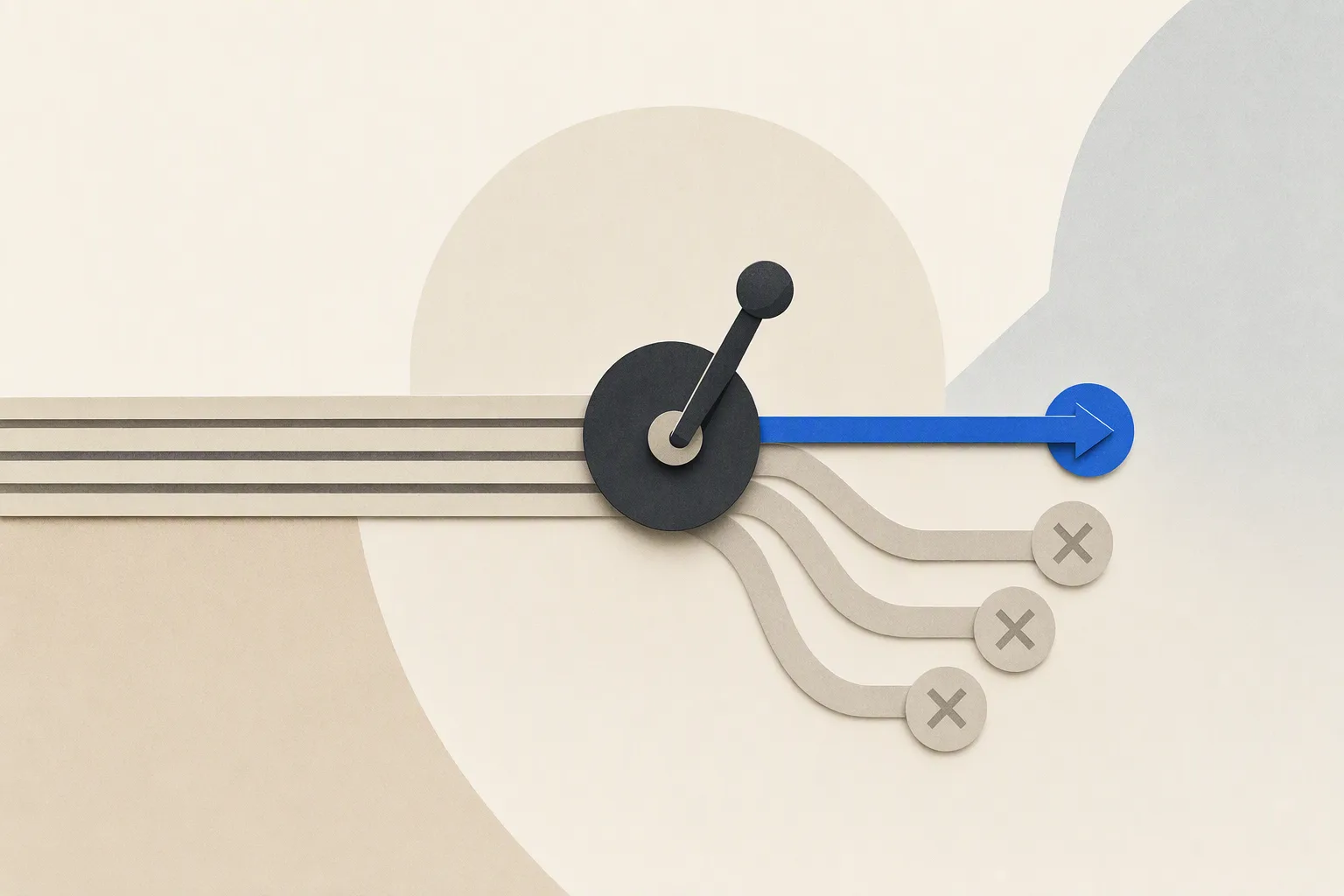
A practical policy starts with separating observation from actuation. read commands can be routed more broadly because they expose state. write commands change the world and should require a narrower route. The first version of a production policy should look less like a model allowlist and more like an operations matrix:
readaccess for cameras, plate readers, logs, and environmental sensors can run through standard agent models with normal audit logging.- Low-risk
writeaccess such as changing a query parameter or moving a virtual stage should require an approved device profile and bounded values. - High-risk
writeaccess such as robot motion, liquid handling, thermal cycling, or laser control should require an explicit approval step, a signed code artifact, and a device-side safety limit that the model cannot override. - Generated scripts that chain multiple device commands should be treated like deployments. Store the script, the model, the prompt, the operator identity, and the driver versions before execution.
The migration path is concrete. Before MHS, many labs had a human operator or bespoke integration deciding when a model suggestion became a device command. After MHS, the agent harness may present a device as a normal tool. The safe route is to put a gateway or policy broker between the harness and the MHS driver, so the request changes from direct device access to a checked call with route metadata:
{
  "model": "claude-opus-5",
  "tool": "mhs.write",
  "device": "laser_controller_3",
  "operation": "set_frequency",
  "approval": "required",
  "max_duration_seconds": 30
}
This is the same mental model as model routing, but the fallback rule changes. If a hardware operation fails, do not automatically retry on another model. Retry policies should belong to the device profile and should distinguish network failure, safety refusal, physical fault, and model uncertainty.
What TheRouter users should watch now
TheRouter users do not need to route physical devices today to learn from MHS. The useful lesson is that agent tools are becoming more heterogeneous, and the gateway has to carry more context than model, messages, and stream. If your team is already routing coding agents or MCP tool calls, review whether your logs can answer four questions: which model proposed the action, which identity approved it, which tool namespace executed it, and what policy blocked or allowed it.
For current API traffic, TheRouter's stable starting point remains OpenAI-compatible routing through the developer docs and model discovery through the model catalog. For future hardware-agent work, the watch item is whether MHS drivers expose enough structured metadata for gateways to enforce policy before a write reaches a device. If they do, hardware operations can be governed like high-risk tools. If they do not, MHS will reduce integration time while pushing safety back into bespoke lab software.

Claude Code Sub-Agents Can Now Spawn Their Own Sub-Agents: Five-Level Nesting Changes Your Model Routing and Cost Architecture
Anthropic's June 10 Claude Code release unlocks five-level sub-agent nesting. Here's what that means for model routing, cost architecture, and governance in agentic coding workflows.

Claude Managed Agents Gets Self-Hosted Sandboxes and MCP Tunnels: What the Split-Plane Architecture Means for Operators
Anthropic's Managed Agents now lets teams run tool execution in their own infrastructure while keeping orchestration on Anthropic's side. Here's what that split-plane model means for routing, compliance, and private MCP access.
Claude Sonnet 5.5 Ships Five Breaking API Changes for Operators Running Sonnet 5
Claude Sonnet 5.5 (Sep 28) ships 5 breaking changes: forced tool use returns 400, `thinking:disabled` is rejected, thinking blocks are model-bound, `computer_20251124` is gone on the Claude API, and advisor pairings are now 5.x-only.