

OpenAI API Key Creation Governance: How Service-Account-Only Enforcement Closes the Shadow-Routing Gap
OpenAI's new org-level key creation controls let admins enforce service-account-only, project-keys-only, or disable all key creation. The first structural control that prevents shadow routing via personal API keys.
What changed
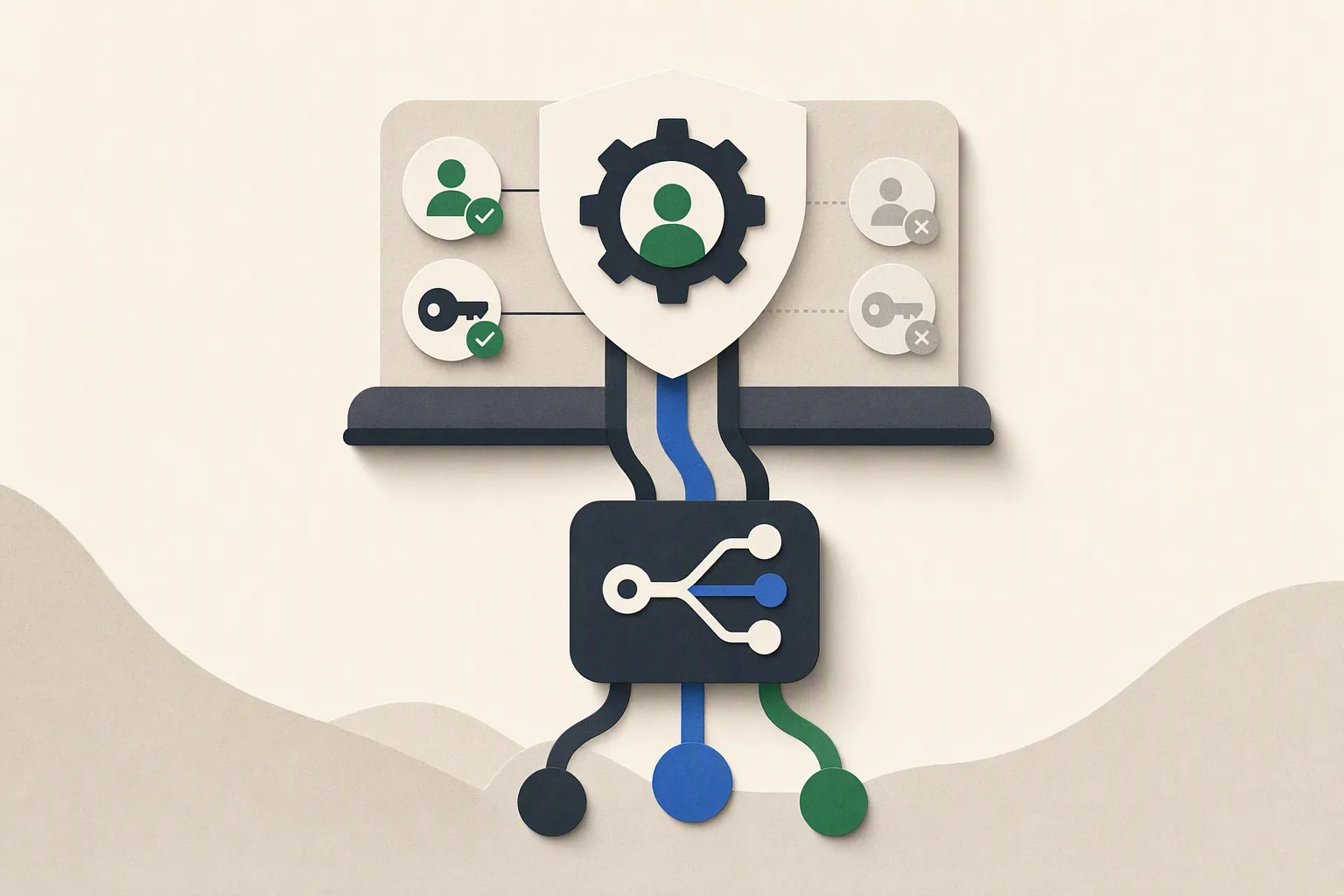
On September 15, 2026, OpenAI added organization-level API key creation governance controls to its platform. Administrators can now enforce one of three modes across their entire organization:
- Service-account-only — only service accounts can create API keys; individual users cannot
- User-owned project keys only — users may create project-scoped keys, but service account key creation is blocked
- Disable all key creation — no new API keys can be created by anyone in the organization
These settings operate at the organization level, which means they take precedence over any conflicting project-level settings. Existing keys are not revoked or invalidated by enabling these controls — only new key creation is affected going forward.
Why this matters for routing teams
Before this change, any team member with access to an OpenAI project could create a user-owned API key that pointed directly at OpenAI's API — completely bypassing whatever gateway or routing infrastructure an operator had put in place. This was not a theoretical risk. Teams that had invested in multi-provider routing, cost controls, rate-limit fallback, or usage observability via a gateway found that a single developer creating a personal key could route around all of it.
The service-account-only enforcement mode is the first structural control OpenAI has shipped that makes this impossible. When enabled at the org level, there is no longer a UI path for an individual developer to create a key that bypasses your gateway. The routing architecture becomes enforceable, not just encouraged in documentation.
This matters most for operators who charge through usage, maintain compliance boundaries, or need reliable attribution of API spend to teams or projects. A shadow key is invisible to your billing aggregation, your anomaly detection, and your fallback logic — until it causes a production incident.
Three credential governance models, one multi-provider team
OpenAI's September 15 change does not exist in isolation. Teams operating a multi-provider routing gateway are now managing three meaningfully different credential governance models simultaneously:
OpenAI (effective September 15, 2026): Creation-type enforcement. Controls operate at org level and govern which type of key a team member is allowed to create — service account versus user-owned. Existing keys are unaffected; governance applies to new issuance only.
Anthropic (July 2026): Mandatory expiration at creation time. Anthropic requires a maximum key lifetime to be set when a key is issued, configurable at org and project level. This shifts credential hygiene from an opt-in practice to a platform-enforced constraint — no key can be created without a declared expiration.
Google Cloud (June 2026): API key restriction enforcement. Keys without explicit API restrictions now trigger service disruption on some services. Teams must declare which Google APIs a key is permitted to call; a key with no restrictions is treated as non-compliant.
Each model solves a different slice of the credential risk surface. OpenAI's governance is about who can create and what type. Anthropic's is about how long a key lives. Google Cloud's is about what scope a key covers. None of them overlaps cleanly, which means a routing team needs to track three separate governance surfaces, three separate audit procedures, and three separate rollout schedules.
What to configure now
If you are an OpenAI org administrator operating a gateway, here is a practical checklist:
- Audit your current key inventory. Use the OpenAI dashboard to enumerate all existing API keys across projects. Identify user-owned keys that are currently active — these are your shadow-routing exposure.
- Enable service-account-only at the org level. Set the enforcement mode at organization scope, not just at individual project scope. Project-level settings are overridden, but org-level is the only setting that provides complete coverage.
- Set key lifetime for new service account keys. OpenAI does not yet mandate expiration, but Anthropic's July precedent makes this worth doing proactively. Document your rotation schedule in your gateway credential store.
- Audit project-level settings for conflicts. After enabling org-level enforcement, review each project's settings to confirm no conflicting configurations remain that could cause confusion during audits.
- Update your gateway credential documentation. If your team's runbooks reference user-owned project keys as a valid credential type, update them now. Service account keys should be the documented path.
Existing keys continue to work. The controls are forward-looking only, which gives you time to rotate legacy keys on your own schedule rather than under incident pressure.
What TheRouter users should watch
For teams routing through a multi-provider gateway, this change has an immediate and a medium-term implication.
Immediately: if your gateway currently accepts credentials for any identity type, consider restricting your OpenAI credential pool to service account keys only. This aligns your gateway policy with the org-level enforcement you are enabling.
Medium-term: as all three major providers — OpenAI, Anthropic, and Google Cloud — have now shipped credential governance changes within a three-month window, expect provider-level credential governance to become table stakes. The pattern suggests that API key management will increasingly be a platform-enforced concern rather than a team-policy concern. Gateway operators should plan for credential metadata — type, expiration, scope, issuing identity — to become a required field in routing decisions, not just a best practice.
The governance gap is closing from the provider side. The routing layer is where that governance gets stitched together across providers.

OpenAI Now Enforces API Key Expiration at the Org Level: What Gateway Operators Must Audit Today
OpenAI now lets admins enforce a maximum key lifetime at the org or project level. Existing keys are not retroactively shortened, but every new key created after the policy must expire within the limit — your gateway is the riskiest place to hold a long-lived key.

OpenAI Agents API Beta: The New Gateway Bypass Operators Need to Account For
OpenAI's Agents API beta ships a dedicated session harness under client.beta.agents that doesn't route through /v1/chat/completions. For teams using AI gateways, this means billing blind spots, missing audit trails, and a new API key scope to manage.

OpenAI API Key Cost Attribution Is Now Programmable: What Every Routing Operator Must Change
OpenAI added the api_key dimension to its Usage and Costs APIs on August 4. For routing teams running multiple keys per organization, this closes the biggest gap in per-path cost attribution — without needing separate orgs.